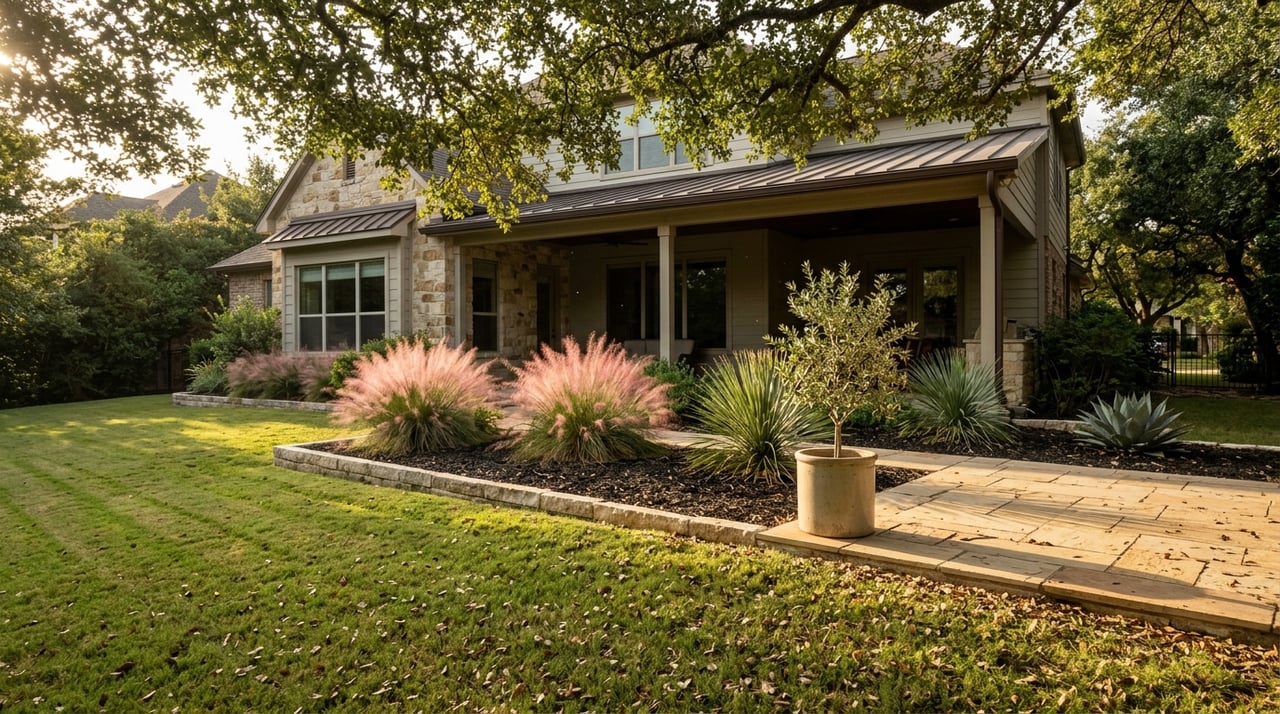
In 2022, twenty-five kids in the Larkspur subdivision were going to school every morning under what their own school board later called a false assumption. Their families had bought homes with Leander addresses, in a community that shows up in every Leander real estate search, and had been sending their children to Leander ISD campuses. Technically, though, that slice of Larkspur sat inside Liberty Hill ISD.
The fix wasn't a court order or a lawsuit. It was a land swap. Liberty Hill ISD agreed to detach that portion of Larkspur and hand it to Leander ISD, and in exchange Leander ISD gave up a strip of land in the Bar W subdivision, which was undeveloped at the time. Liberty Hill's superintendent, Steve Snell, told the Liberty Hill Independent that this kind of trade almost never happens. He also explained why it happened in the first place: developers build on ranchland without much regard for where old school district lines fall, so a boundary drawn decades ago can end up cutting straight through a subdivision, or even a single street.
That story is four years old now, but the lesson it teaches has not expired. If anything, it has gotten more relevant, because Larkspur is still marketed and searched as a Leander community, and buyers comparing it against Crystal Falls or Bryson on price per square foot are often assuming they're comparing equivalent packages. They aren't. Part of Larkspur sits in Liberty Hill ISD to this day. The rest, thanks to that 2022 swap, is in Leander ISD. Which side of that line a specific address falls on is not something a listing photo, a subdivision name, or even a median price can tell you.
The map keeps moving even inside Leander ISD
The Larkspur situation is the most dramatic version of the problem because it crosses two entirely different school districts. But even within Leander ISD, the specific high school or middle school a home feeds into is not fixed. It's redrawn on a recurring basis as the district grows, and the district has been growing fast enough that this isn't a once-a-decade event.
Glenn High School is the clearest example. It's the newest campus in the district, built specifically to relieve overcrowding at Rouse High School and to absorb the wave of development along Ronald Reagan Boulevard, including the communities near Larkspur and Bryson. Before Glenn opened, those secondary zoning lines went through multiple rounds of public scenarios, board discussion, and revision, with neighborhood codes bouncing between Rouse, Glenn, Leander High, and Cedar Park High as planners tried to balance enrollment. Danielson Middle School's opening triggered a similar round of rezoning discussion a few years earlier.
This isn't ancient history either. Leander ISD's board approved a new attendance zoning plan, referred to internally as Scenario B, for the 2026-27 school year at its February 5, 2026 meeting. The district's own attendance zones page carries a warning that is easy to miss and important to read closely: the interactive lookup tool "should not be used to make decisions related to home purchases or rental agreements." The district is telling you, in its own words, that the map you'd naturally check before buying is not the one to trust for that purpose. The tool is for finding out where your kids go to school this year. It says nothing about where they'll go in three years, once the next campus opens or the next scenario gets approved.
For a family relocating from out of state and comparing Leander neighborhoods from a spreadsheet, this is the part that doesn't show up anywhere obvious. A home zoned to one high school today can be rezoned before a fifth grader reaches ninth grade. That's not a defect in the district. It's a predictable consequence of a school system that has been one of the fastest-growing in the state for over a decade. But it means the attendance zone you see in a listing description is a snapshot, not a guarantee.
The same instability shows up in your tax bill
Boundaries that shift underneath a subdivision aren't limited to school zoning. Crystal Falls, one of Leander's oldest and most established communities, is itself a good example of how much variation can exist inside a single, well-known neighborhood name.
Crystal Falls has been developed in phases since around 2000, and different phases were built under different infrastructure financing. Sections built before roughly 2005 often carry no Municipal Utility District assessment at all, because the water, sewer, and drainage infrastructure was already in place or paid off. Sections built after 2015 may fall under a newer MUD, sometimes cited as MUD 15, that's still retiring bond debt. The practical result is that two homes in Crystal Falls, both listed around $500,000, can carry annual tax bills that differ by $1,500 or more depending on which phase they sit in, according to a Crystal Falls-focused market guide referencing Williamson County tax data. The subdivision name tells you almost nothing about which side of that split you're on.
Williamson County has more of these Municipal Utility Districts than almost anywhere else in Texas, largely because that's how the county's rapid new-construction growth in places like Leander and Liberty Hill got financed in the first place. A developer who wants to build where there's no existing utility infrastructure petitions the state to create a MUD, the MUD issues bonds, and homeowners inside the district pay down that debt through an added tax line for as long as the bonds are outstanding. Those rates decline over time as the debt is retired, but they don't disappear on a schedule tied to the subdivision's marketing brochure. They disappear on a schedule tied to the bond documents, which you can look up but won't find summarized in a listing sheet. The Williamson County Appraisal District's property search tool will show you exactly which taxing entities apply to a specific parcel, MUD included, and it's a more reliable read on the actual carrying cost than any neighborhood-level average.
What to actually verify before comparing two Leander homes
None of this means Leander is a risky place to buy. It means the unit of comparison buyers instinctively reach for, the subdivision name, is doing less work than it appears to. Two things worth checking before treating any two "Leander" homes as apples to apples:
- School zoning for the specific parcel, verified through Leander ISD's official street directory listing or by calling the district directly, not just the neighborhood-level reputation. If the home is in a growth corridor like the area near Larkspur and Bryson, ask whether any rezoning discussion is currently underway.
- Tax jurisdiction for the specific parcel, verified through the Williamson County Appraisal District's parcel search, which will list every MUD, PID, or utility district assessment tied to that address rather than a neighborhood-wide estimate.
Both of these take a few minutes and cost nothing, and both can change the real answer to "which of these two homes is the better deal" in ways a median price never will.
A few straight answers
Is all of Leander in Leander ISD? No. Most of it is, but pockets, including part of Larkspur, fall under Liberty Hill ISD. The only reliable way to confirm a specific address is through the school district's official lookup or by contacting the district directly, not through the subdivision's marketing.
Do Leander ISD attendance zones change often? Yes, on a recurring basis as new campuses open and enrollment shifts. The district approved a new zoning scenario for the 2026-27 school year in February 2026, following a similar process when Glenn High School and Danielson Middle School opened.
Does every home in a MUD-financed community pay the same rate? Not necessarily. Communities built in phases, like Crystal Falls, can have sections with no MUD alongside sections still paying down MUD bonds, which produces real differences in the annual tax bill for comparably priced homes in the same subdivision.
If you're comparing Leander communities and want someone to check the actual parcel, not just the neighborhood reputation, before you fall for a floor plan, that's the kind of homework Mahshid Caras does before a client ever schedules a showing. Get in touch and let's verify what you're really buying.