Looking at Southwest Austin and wondering whether Circle C is really the right fit for you? It is a smart question, especially when several nearby suburbs offer different housing patterns, commute options, and amenity styles. If you are relocating, moving up, or simply trying to narrow your search, this comparison will help you understand how Circle C Ranch stacks up against Shady Hollow, Oak Hill, Bee Cave, and Lakeway. Let’s dive in.
Why Circle C Is the Benchmark
Circle C Ranch is one of Southwest Austin’s best-known master-planned communities, and it sets a high bar for suburban living in this part of the city. According to Stratus and the Circle C HOA, the community includes more than 3,700 homes, a 500-plus acre park, multiple pools, a community center, six playscapes, retail nodes, and resident-focused park spaces.
It also stands out for how complete the neighborhood feels. In addition to the residential footprint, Circle C includes access to the Lady Bird Johnson Wildflower Center, a fire station, a child development center, and shopping areas like Parkside Village and Escarpment Village. For many buyers, that creates a strong sense of convenience without leaving Southwest Austin.
Circle C Housing Feel
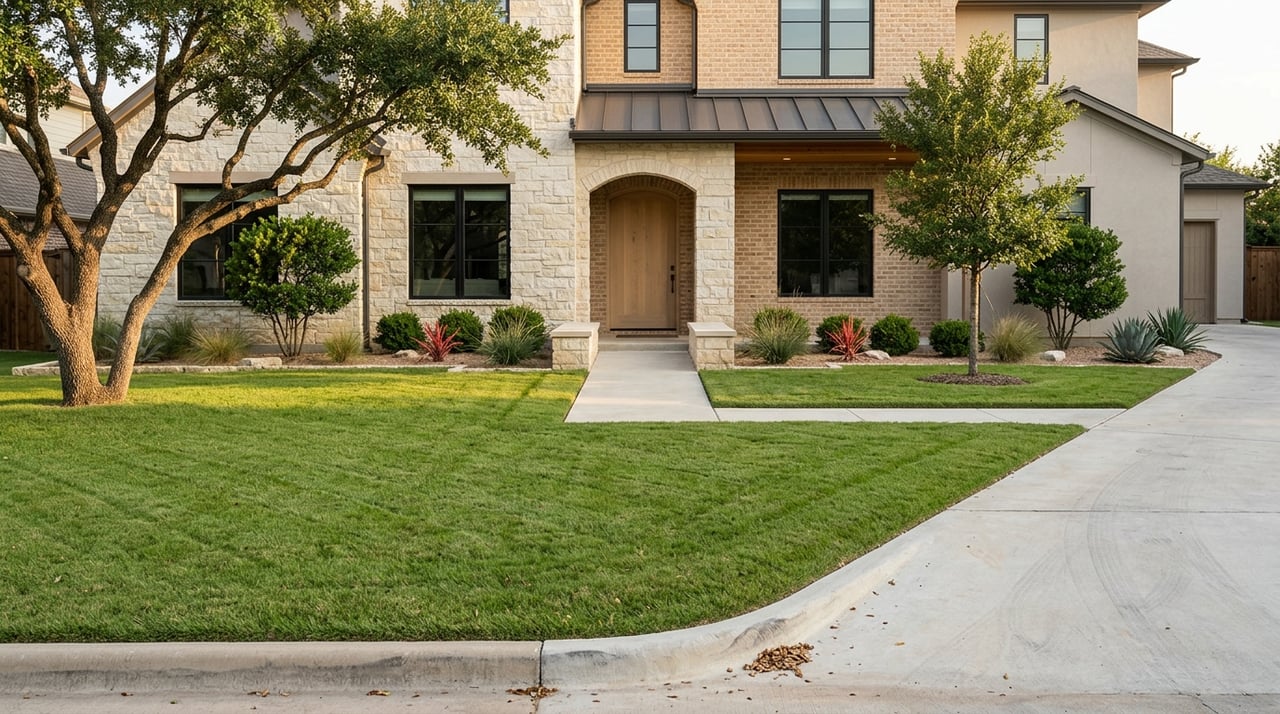
Circle C is best understood as a mostly detached-home neighborhood with HOA structure and a long buildout history. Because it developed over time, you will find both older and newer sections rather than one uniform product style. That can appeal to buyers who want suburban scale with a more established feel.
The neighborhood is also more regulated than some nearby alternatives. The HOA’s architectural control rules apply to single-family homes and lots, which helps maintain visual consistency across the community. If you value a planned environment, that may be a plus.
Shady Hollow vs Circle C
Shady Hollow is often the closest comparison for buyers who like Southwest Austin but want an established residential setting. Its HOA manages amenities such as Capistrano Park, the West Nature Preserve, and the David C. Ellis Community Center, which gives it a similar club-style structure.
Compared with Circle C, Shady Hollow tends to feel quieter and more tree-lined. It is still largely single-family in character, but the amenity package is more modest and more neighborhood-scaled. If Circle C feels a little too large or too active, Shady Hollow may be the closest substitute.
Best fit for Shady Hollow
Shady Hollow may be a strong option if you want:
- An established neighborhood setting
- HOA-managed amenities
- Spacious lots and a residential feel
- A quieter amenity profile than Circle C
Oak Hill vs Circle C
Oak Hill is very different from Circle C because it is not one master-planned neighborhood. The City of Austin’s Oak Hill Combined Plan identifies it as Austin’s largest neighborhood planning area at about 11,000 acres, with roughly 34% still undeveloped.
That scale changes the experience. Instead of one cohesive neighborhood core, Oak Hill functions more like a broad southwest corridor with older homes, commercial areas, and pockets of redevelopment. If you want variety and flexibility, Oak Hill can offer that, but it will not feel as packaged or uniform as Circle C.
Oak Hill lifestyle tradeoff
Circle C offers more structure and a clearer neighborhood identity. Oak Hill offers a wider range of settings, from established homes to areas influenced by ongoing growth. Buyers who do not need a tight HOA-style environment may appreciate Oak Hill’s broader choice set.
Bee Cave vs Circle C
Bee Cave compares differently because it is a small city with multiple development patterns, not a single master-planned community. City planning materials reference detached and attached homes, patio homes, townhomes, zero-lot-line homes, multifamily, and senior housing.
That means Bee Cave can appeal to buyers who want a more mixed-use and future-facing environment. Compared with Circle C, it offers more housing variety and a more city-like framework, even though it still delivers suburban access and Hill Country positioning.
Bee Cave lifestyle tradeoff
If Circle C is about a complete neighborhood package, Bee Cave is more about flexibility and convenience across a small-city setting. Buyers who want daily access to retail and civic amenities may find Bee Cave especially appealing.
Lakeway vs Circle C
Lakeway is the most single-family-dominant option in this group. According to the city’s 2025 market-position report, condos, duplexes, and multifamily together account for less than 1.5% of land use, so the housing base is almost entirely single-family.
In practical terms, Lakeway tends to skew toward larger established homes with limited denser housing options. Compared with Circle C, it is less about a master-planned suburban grid and more about a highly residential lake-area setting.
Lakeway lifestyle tradeoff
If you want a stronger lake-oriented identity and a mostly single-family environment, Lakeway stands out. If you prefer a closer-in Southwest Austin location with a more defined master-planned structure, Circle C may feel more practical.
Commute and Access Compared
Commute patterns can shape this decision just as much as homes or amenities. Circle C benefits from Slaughter Lane, which the City of Austin identifies as a major arterial that serves residences, businesses, and commuters. The corridor is auto-dominated today, but it is also part of broader mobility planning with high-capacity transit goals.
That tends to make Circle C feel well-positioned for people who need access to central Austin or south Austin. It offers a balance between suburban neighborhood living and practical city connection.
Oak Hill is more corridor-driven. Because it covers such a large area and connects to major southwest routes, it may feel more flexible for buyers focused on west and southwest access rather than a neighborhood-centered experience.
Bee Cave and Lakeway sit farther west and are more tied to the RM 620 and Highway 71 side of the market. Bee Cave describes itself as a gateway to the Hill Country, and city sources point to mixed-use and employment activity there. Lakeway also has its own local employment anchors, including its city center development and medical district.
Amenities and Outdoor Access
Circle C has the deepest amenity package in the comparison group. The HOA lists multiple pools, a community center, six playscapes, Circle C Metropolitan Park, Slaughter Creek Trail, the Veloway, Grey Rock Golf Club, Circle C Tennis Club, and the Wildflower Center. Austin Parks also notes that the Veloway is a 3.1-mile paved bicycle and inline-skate track.
The neighborhood also benefits from larger city-level trail connections. The City of Austin says the Violet Crown Trail extension from Circle C Park toward Hays County is under construction, adding to Circle C’s already strong outdoor identity.
Shady Hollow is more modest but still attractive for buyers who value neighborhood recreation. Capistrano Park includes a swimming pool, wading pool, tennis courts, basketball court, picnic tables, playscapes, playgrounds, and barbecue grills. The West Nature Preserve adds walking paths, benches, and additional play areas.
Oak Hill’s advantage is less about packaged amenities and more about open space and natural scale. The area is near Barton Creek Greenbelt trail access, and city planning sources highlight how much land remains undeveloped. If you prefer a less curated environment, that may be a draw.
Bee Cave offers a more compact park-and-retail connection. Its Hike and Bike Trail links Falconhead Boulevard to Central Park and the Galleria area, while Central Park includes a perimeter trail, dog park, shaded play structures, restrooms, and water fountains.
Lakeway is the most lake-oriented option. Lakeway City Park offers nearly two miles of walking and hiking trails, a butterfly garden, bark park, sports courts, playscapes, picnic areas, and lake access when water levels allow. The city also maintains additional trail and greenbelt systems, along with an Activity Center for community programming.
Which Southwest Austin Suburb Fits You Best?
If you want the strongest all-around blend of master-planned amenities, Southwest Austin access, and a robust trail network, Circle C is the benchmark. It offers one of the most complete suburban packages in the area without feeling far removed from Austin.
If your priority is an established, HOA-managed neighborhood with a quieter residential character, Shady Hollow is a strong alternative. If you want the broadest range of settings and do not mind a less uniform environment, Oak Hill offers the most flexibility.
Bee Cave may be the best fit if you are drawn to mixed-use Hill Country convenience and a wider housing mix. Lakeway stands out if you want a highly residential, single-family-dominant community with a lake-oriented identity.
The right choice depends on how you weigh neighborhood structure, housing style, outdoor access, and commute geography. If you want help narrowing down the best Southwest Austin fit for your move, Mahshid Caras can guide you through the options with local insight and a strategic, detail-focused approach.
FAQs
How does Circle C Ranch compare to other Southwest Austin suburbs?
- Circle C offers one of the most complete master-planned amenity packages in Southwest Austin, while Shady Hollow feels quieter, Oak Hill is more corridor-based, Bee Cave is more mixed-use, and Lakeway is more lake-oriented and single-family dominant.
Is Circle C Ranch a master-planned community in Southwest Austin?
- Yes. Circle C Ranch is a large master-planned community with more than 3,700 homes, multiple pools, parks, trails, retail areas, and other resident amenities.
What is the housing style in Circle C Ranch compared with Bee Cave and Lakeway?
- Circle C is mostly detached single-family housing with HOA structure, Bee Cave has a more varied housing framework, and Lakeway is overwhelmingly single-family in land use.
Which Southwest Austin suburb has the strongest outdoor amenities?
- Circle C stands out for its broad amenity package, including parks, pools, trails, the Veloway, and access to larger outdoor assets like the Wildflower Center and regional trail connections.
Is Oak Hill more flexible than Circle C Ranch for homebuyers?
- Oak Hill may feel more flexible because it is a large planning area with varied housing pockets and redevelopment areas, but it does not offer the same cohesive neighborhood identity as Circle C.
Which suburb is best for buyers relocating to Southwest Austin?
- It depends on your priorities. Circle C is a strong all-around choice, Shady Hollow suits buyers who want an established HOA neighborhood, Oak Hill offers variety, Bee Cave fits mixed-use convenience, and Lakeway appeals to buyers seeking a lake-area residential setting.